
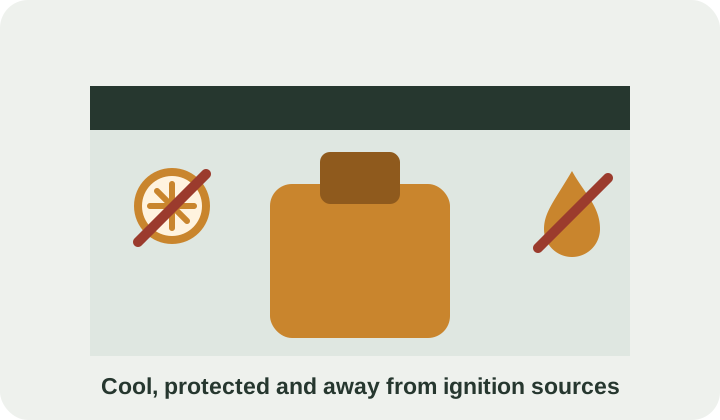
Transport and storage rules are different
A quantity that can be transported under a private-use exemption is not automatically permitted in a home, garage, basement or shed. Storage rules can vary by country, region, building type and garage size. Tenancy agreements, insurance conditions and fire-safety requirements may add further restrictions.
Use only the right container
The can must be intended for the fuel, close securely and remain in sound condition. Do not store fuel in beverage bottles, water cans or unknown reused containers. Keep the contents clearly identified and avoid mixtures with an uncertain history.
Choose the location carefully
Keep the can upright, stable, protected from direct sun and away from ignition sources. Living rooms, bedrooms, escape routes and poorly controlled communal areas are not appropriate storage locations. Good ventilation cannot compensate for a leaking container.
Inspect regularly
Look for cracks, deformation, brittleness, corrosion, damaged seams, defective seals and fuel odour. A fixed date is not a substitute for inspecting the actual can. Plastic and metal have different ageing mechanisms, but neither is maintenance-free.
Do not promise a universal fuel shelf life
Fuel stability depends on formulation, temperature, air contact, contamination and the equipment in which it will be used. When the fuel’s history is unknown or its appearance or odour has changed, do not put it into a vehicle or generator without appropriate guidance. Use local hazardous-waste instructions for disposal.
Storage checklist
- Actual local storage rules checked
- Suitable and clearly marked container
- Cap, seal and body undamaged
- Upright, protected position
- Away from heat, flames and sparks
- No fuel odour or signs of leakage
- Quantity limited to the real need
Frequently asked questions
How much petrol or diesel may I store in a garage?
There is no reliable universal figure. Rules depend on country, region, garage type, tenancy conditions and other local requirements.
Is a car a suitable permanent storage place?
No. Temperature changes, sunlight and proximity to passengers make a vehicle a poor permanent storage location. Carry fuel only for the necessary journey.
How long does fuel last in a can?
A reliable general period cannot be stated without the fuel specification, container, seal and storage conditions. Follow fuel supplier and equipment manufacturer information.
Sources for this guide
The following authorities and documents were used for this guide. Where rules change, the current original source takes precedence.
- Fuel in a spare can: what is permitted? [German]ADACGerman transport quantities, container marking, restraint in vehicles, international travel and ferries
- How long may spare cans be used and what quantities may be carried? [German]KomNet NRW / Landesamt für Gesundheit und Arbeitsschutz Nordrhein-WestfalenGerman private transport context, load restraint and the five-year period for specified plastic packaging uses
- Do steel jerricans have an expiry date? [German]KomNet NRW / Landesamt für Gesundheit und Arbeitsschutz Nordrhein-WestfalenGerman official guidance on marking and service life of steel jerricans