
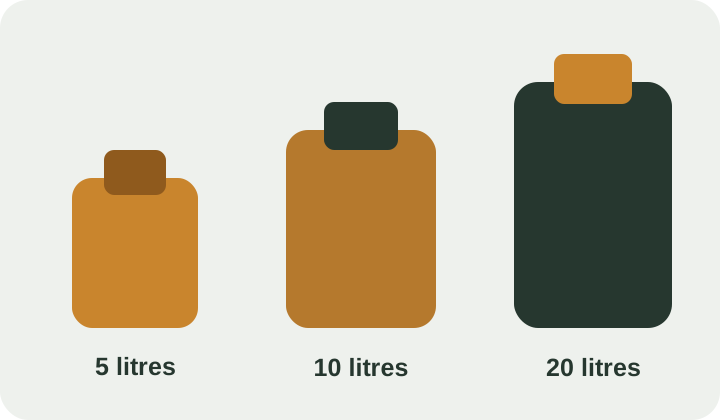
5 litres: compact reserve
A five-litre can is easier to fit into a small vehicle, carry over short distances and control while pouring. The obvious trade-off is limited range or operating time.
10 litres: the middle option
Ten litres often offers a practical compromise between reserve and handling. It is still important to check the actual dimensions because two cans with the same nominal capacity can have different shapes.
20 litres: large but demanding
A twenty-litre can creates a substantial filled weight and may be difficult to lift and pour without a stable position and suitable spout. It also occupies more space and may be inappropriate where an operator, ferry or local rule limits carried fuel.
Do not confuse capacity with permission
A can being sold in a certain size does not mean that the filled container may be carried or stored in every country, vehicle, garage, ferry or workplace. Quantity rules and exemptions are context-specific.
| Size | Best suited to | Main trade-off |
|---|---|---|
| 5 L | compact emergency reserve | small reserve |
| 10 L | balanced private use | greater weight and space |
| 20 L | high fuel demand where permitted | heavy and harder to handle |
Questions before choosing
- How much fuel is genuinely needed?
- Can the full can be lifted without unsafe twisting or overreaching?
- Is there a secure upright position in the vehicle or storage area?
- Can the spout be used without lifting the can above a safe height?
- Do route, ferry and local storage rules permit the intended quantity?
Frequently asked questions
Which size is best for occasional car use?
Often the smallest capacity that covers the realistic need is easiest to carry, secure and pour. The route and local rules must still be checked.
How heavy is a full 20-litre can?
The total weight depends on the liquid and the can. It will be substantially heavier than the nominal litres alone suggest, so use manufacturer data and the actual fuel density for planning.
Can I carry several smaller cans instead?
That may improve individual handling but does not remove total quantity limits, securing requirements or operator restrictions.
Sources for this guide
The following authorities and documents were used for this guide. Where rules change, the current original source takes precedence.
- Fuel in a spare can: what is permitted? [German]ADACGerman transport quantities, container marking, restraint in vehicles, international travel and ferries
- German Dangerous Goods Ordinance for road, rail and inland waterways [German]Bundesministerium der Justiz / Gesetze im InternetGerman legal framework for dangerous-goods transport and reference to ADR
- Section 22 German Road Traffic Regulations – Loads [German]Bundesministerium der Justiz / Gesetze im InternetGeneral German requirements for securing loads