
Start with the container
The can must be intended for the fuel and show a readable permanent marking. Check the cap, seal, body and handle before loading it. An approved design does not make a damaged individual can suitable.
Secure it as load
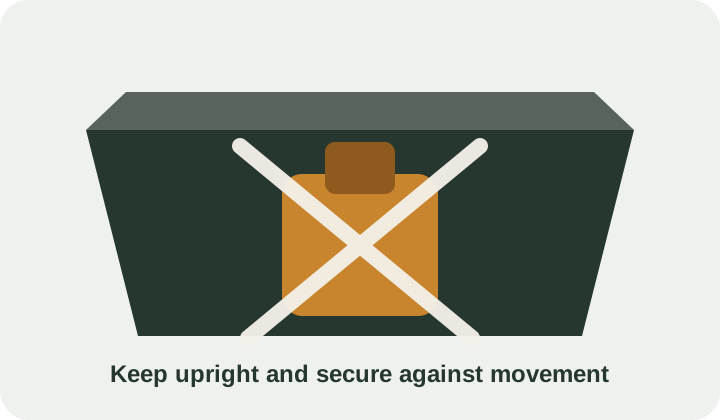
Place the can upright in a stable part of the luggage compartment and restrain it against sliding, tipping and impact. Do not rely on other loose luggage to hold it in place. Keep it away from hot components and protect it from damage by tools or sharp objects.
German figures need German context
German motoring guidance describes private-transport exemptions and legal maximum quantities under German dangerous-goods rules, while recommending a much smaller practical reserve for safety. These figures must not be copied into an international guide as if they applied everywhere.
Ferries and crossings
Some ferry operators or routes prohibit spare fuel or set their own conditions. A booking confirmation does not prove that a filled can is accepted. Check the current dangerous-goods or vehicle conditions published by the operator and contact the operator when the wording is unclear.
Before departure
- Correct can and readable marking
- Cap and seal intact
- Only the intended fuel inside
- Upright, stable and restrained position
- No avoidable excess quantity
- Transit countries and operators checked
- No fuel odour or visible leakage
If you smell fuel
Stop safely, avoid ignition sources and investigate the cause. Ventilation alone does not make a leaking can acceptable. A suspect container should not continue the journey until the source of the odour or leakage has been resolved safely.
Frequently asked questions
Can I leave a filled fuel can loose in the boot?
No. The container should remain upright and be restrained against sliding, tipping and impact. General load-restraint duties apply independently of the fuel-specific rules.
Are German quantity limits valid across Europe?
No. Countries, tunnels, ferries and operators can apply different rules or prohibitions. Check the whole route shortly before travel.
Does an approved can remove all risk?
No. Approval does not replace a sound closure, suitable filling, load restraint, ventilation considerations and route-specific compliance.
Sources for this guide
The following authorities and documents were used for this guide. Where rules change, the current original source takes precedence.
- Fuel in a spare can: what is permitted? [German]ADACGerman transport quantities, container marking, restraint in vehicles, international travel and ferries
- German Dangerous Goods Ordinance for road, rail and inland waterways [German]Bundesministerium der Justiz / Gesetze im InternetGerman legal framework for dangerous-goods transport and reference to ADR
- Section 22 German Road Traffic Regulations – Loads [German]Bundesministerium der Justiz / Gesetze im InternetGeneral German requirements for securing loads
- Section 23 German Road Traffic Regulations – Driver duties [German]Bundesministerium der Justiz / Gesetze im InternetGerman driver responsibility for vehicle, visibility and load
- How long may spare cans be used and what quantities may be carried? [German]KomNet NRW / Landesamt für Gesundheit und Arbeitsschutz Nordrhein-WestfalenGerman private transport context, load restraint and the five-year period for specified plastic packaging uses